


Features Of Burette
Oct 20, 2023
A burette is a laboratory instrument that is used for dispensing precise quantities of a liquid solution. It features a long, slender cylindrical tube that is graduated with a marking system that enables the precise measurement of liquid volumes.
One of the primary features of a burette is its accuracy and precision. The marking system on the burette enables users to measure liquid volumes with high levels of accuracy. This feature is critical in scientific experiments and research, where even minor measurement errors can negatively impact the results.
Another feature of a burette is its flexibility. The instrument can be used for a wide range of applications, including titration, and delivering solutions to chemical reactions. The versatility of the burette makes it a critical tool in any laboratory setting.
The burette is also easy to use and maintain, and it is designed to offer excellent accuracy and stability over its lifetime. This feature helps ensure that data obtained from experiments performed using the burette is reliable and of high quality.
In conclusion, burettes are essential tools in any laboratory setting, and they offer a wide range of features that make them critical instruments for delivering accurate and precise measurements of liquid volumes. The burette's accuracy, flexibility, ease of use, and maintenance make it an excellent investment for any lab in need of high-precision liquid dispensing instruments.
A burette is a laboratory instrument that is used for dispensing precise quantities of a liquid solution. It features a long, slender cylindrical tube that is graduated with a marking system that enables the precise measurement of liquid volumes.
One of the primary features of a burette is its accuracy and precision. The marking system on the burette enables users to measure liquid volumes with high levels of accuracy. This feature is critical in scientific experiments and research, where even minor measurement errors can negatively impact the results.
Another feature of a burette is its flexibility. The instrument can be used for a wide range of applications, including titration, and delivering solutions to chemical reactions. The versatility of the burette makes it a critical tool in any laboratory setting.
The burette is also easy to use and maintain, and it is designed to offer excellent accuracy and stability over its lifetime. This feature helps ensure that data obtained from experiments performed using the burette is reliable and of high quality.
In conclusion, burettes are essential tools in any laboratory setting, and they offer a wide range of features that make them critical instruments for delivering accurate and precise measurements of liquid volumes. The burette's accuracy, flexibility, ease of use, and maintenance make it an excellent investment for any lab in need of high-precision liquid dispensing instruments.
How to use a burette
A burette is a common laboratory instrument used to measure the volume of a liquid with great accuracy. It is particularly useful for titration experiments, where a precise volume of solution needs to be added to another solution until a chemical reaction is complete. Here are the steps on how to use a burette:
1. Preparation: Make sure your burette is clean and dry. Rinse the burette with distilled water to remove any impurities and dry it with a lint-free cloth.
2. Fill: The burette must be properly filled with the solution to be used. First, clamp the burette onto a stand, and insert the funnel into the top of the burette. Pour the solution into the funnel, ensuring that there are no air bubbles trapped.
3. Drain: Slowly turn the stopcock to allow the solution to drain from the burette. When air bubbles begin to appear in the burette tip, carefully tap the burette with your finger to dislodge them.
4. Final adjustment: Once the air bubbles have been dislodged, close the stopcock. Carefully record the initial volume reading of the burette to the nearest 0.05 ml.
5. Dispensing: Slowly add the solution to the receiving container, keeping your eye on the meniscus (the curve of the solution where it touches the burette inner surface) at all times. Stop adding when the meniscus reaches the required volume.
6. Reading: Read the final volume from the burette to the nearest 0.05 ml. The volume used in the titration is the difference between the initial and final volume readings.
Overall, burettes are a valuable tool for accurately measuring the volume of a solution in chemistry experiments. Proper use of a burette is essential for obtaining reliable results, and following these steps can help ensure the accuracy of your measurements.
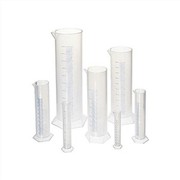 Lab Graduated Pastic 50ml 100ml Measuring Cylinder w...
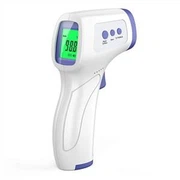 Body forehead Handheld Thermometer Medical Digital N...
 Disposable Waterproof Blue Nitrile PVC Blended Vinyl...
 Laboratory Disposable Ziplock LDPE Biohazard Specime...
 Medical Plastic Ware Anti-fog Full Face Shield With ...
 Autoclavable Single Channel High Temperature-resista...